



Key Takeaways
- Vision-based tablet inspection machines enhance quality control in Indian pharma plants by standardizing defect detection processes.
- Selecting reliable Tablet Inspection Machine Manufacturers in India is crucial for meeting GMP standards in 2026.
- Automated inspection technology reduces dependence on manual checks while improving documentation and defect traceability.
- AI-powered systems offer advanced capabilities to detect a range of tablet defects consistently in production.
- Pharmaceutical companies must verify integration requirements when choosing Tablet Inspection Machine Suppliers in India to ensure seamless operation.
In 2026, Indian pharmaceutical plants are working in an environment where consistent quality control, validated processes, documentation and reliable equipment performance carry increasing importance. Vision-based tablet inspection helps manufacturers identify physical defects at production speed while reducing dependence on subjective manual inspection.
This is why pharmaceutical plants evaluating Tablet Inspection Machine Manufacturers in India are increasingly looking at automated vision technology as part of their GMP-focused quality systems.
Why Tablet Inspection Matters More for GMP in 2026
Good Manufacturing Practices focus on producing and controlling pharmaceutical products consistently according to defined quality standards. In India, the revised Schedule M framework has further strengthened the focus on pharmaceutical quality systems, equipment, documentation, process controls and validation.
For eligible small and medium manufacturers that received an extension under the 2025 notification, the compliance extension could not extend beyond December 31, 2025. As a result, 2026 places greater focus on practical implementation of upgraded GMP systems.
Tablet inspection is one part of this broader quality framework. A vision inspection machine does not itself make a plant GMP-compliant, but it can support repeatable inspection, documented defect information and controlled rejection processes.
How Vision-Based Tablet Inspection Works
Modern tablet inspection systems use industrial cameras, controlled imaging and software algorithms to evaluate individual products as they pass through the inspection area.
A typical inspection process includes:
- Tablets enter the inspection zone.
- High-resolution cameras capture product images.
- Vision software evaluates defined characteristics.
- Products are compared against configured acceptance criteria.
- Out-of-specification products are identified.
- A rejection mechanism removes defective products.
- Inspection and defect information can be recorded for review.
For companies comparing Tablet Inspection Machine Suppliers in India, the important question is not simply whether a machine can take an image, but how reliably it can inspect products under actual pharmaceutical production conditions.
Detecting Physical Tablet Defects More Consistently
Manual visual inspection can be affected by operator fatigue, inspection speed, lighting conditions and differences in individual judgement.
Vision-based inspection provides a more standardized approach. Depending on the configured application, systems can evaluate characteristics such as:
- Color and shade variation
- Tablet size
- Shape
- Surface condition
- Physical damage
- Foreign matter
- Product variation
Consistent inspection criteria can help strengthen routine quality control by applying the same configured checks across the production run.
This capability is particularly relevant when pharmaceutical companies assess Tablet Inspection Machine Manufacturers in India for high-volume solid dosage production.
Supporting GMP Through Automated Defect Rejection
Identifying a defective tablet is only useful when the production process can act on that information.
An automated inspection system can detect an unacceptable product and trigger a rejection mechanism so the affected tablet does not continue with accepted products.
This controlled detect-and-reject approach can support GMP-focused manufacturing by reducing reliance on manual identification and removal.
Production teams should still establish qualified inspection parameters, appropriate rejection limits and documented procedures. The machine becomes part of the quality-control process rather than replacing the plant's QA system.
Better Documentation and Defect Traceability
GMP is closely connected with documented evidence that manufacturing and quality-control procedures were followed correctly.
This is another area where modern vision inspection can add value.
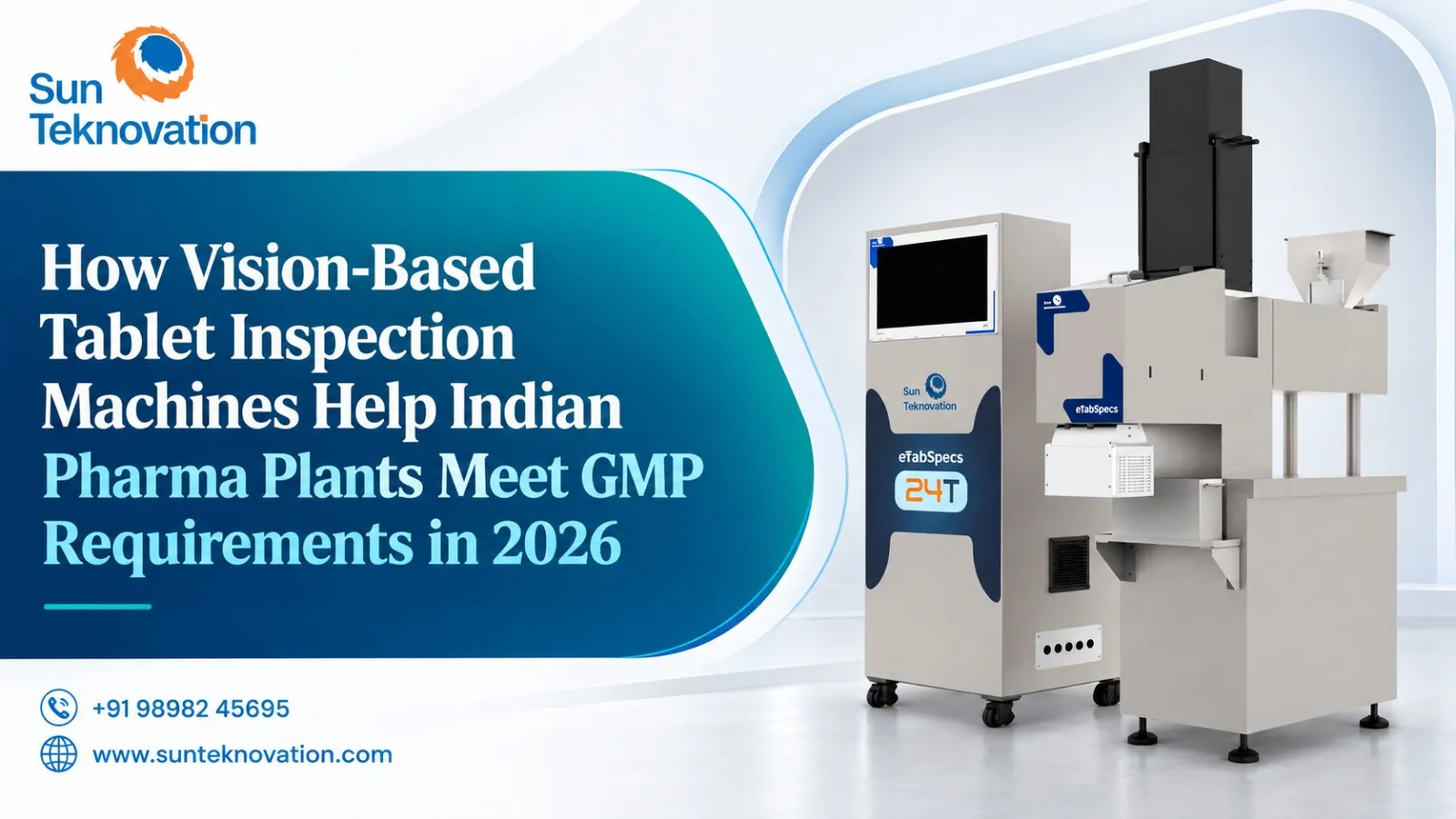
Sun Teknovation's eTabspec system automatically stores batch-specific information for rejected items, including the identified defect type. The system also provides defect reporting with images, creating useful information for production and quality teams.
For buyers evaluating Tablet Inspection Machine Suppliers in India, such data capabilities can be important when reviewing deviations, recurring defects and manufacturing trends.
Using AI for More Detailed Inspection
AI and deep-learning technologies have expanded what machine vision can do in pharmaceutical inspection.
eTabspec uses high-resolution cameras with AI-powered vision technology to perform comprehensive inspection of tablets for color, size and shape. The system is also designed to identify shade variation, foreign matter and physical damage.
Its AI framework learns visual characteristics of different tablet and capsule types and evaluates geometric and color attributes during inspection.
Sun Teknovation Pvt Ltd. has designed eTabspec for tablets, capsules and caplets, making the platform suitable for pharmaceutical plants handling different solid dosage forms.
Integration With Existing Pharmaceutical Lines
A tablet inspection machine should fit into the production process without creating unnecessary disruption.
eTabspec is designed for integration with tablet counters and bottle packaging lines. Sun Teknovation also states compatibility with counters and de-dusters, helping manufacturers incorporate automated inspection into existing production environments.
When comparing Tablet Inspection Machine Manufacturers in India, buyers should review:
- Compatibility with the existing line
- Product types and formats to be inspected
- Inspection parameters required
- Rejection mechanism
- Changeover requirements
- Defect data and reporting capabilities
- Validation and documentation requirements
A technically capable machine still needs appropriate installation, qualification, operation and maintenance within the plant's GMP system.
Reducing Dependence on Manual Inspection
Automated vision inspection does not remove the need for skilled QA, production and engineering teams. Instead, it can reduce repetitive manual inspection activity and provide production personnel with more consistent inspection information.
The eTabspec system is designed to reduce manual measurement error and machine setup time while providing automated dimension measurement and defect information.
For pharmaceutical plants reviewing Tablet Inspection Machine Suppliers in India, automation can therefore support both quality-control consistency and production efficiency without replacing human oversight.
What Pharma Plants Should Verify Before Selecting a System
Selecting a tablet inspection machine should involve production, QA, validation and engineering teams rather than being treated only as an equipment purchase.
Before finalizing a system, verify:
- Which tablet defects must be detected.
- Whether tablets, capsules or caplets will be inspected.
- Required production-line integration.
- Camera and lighting suitability for the product.
- Rejection and verification methods.
- Batch data and defect-image recording.
- Qualification and validation documentation.
- Cleaning and changeover requirements.
These practical checks can help buyers compare Tablet Inspection Machine Manufacturers in India according to their actual GMP and production needs.
Why Choose Us
Sun Teknovation Pvt Ltd. develops machine vision and pharmaceutical inspection technologies for modern production environments. Our eTabspec Tablet Inspection System combines high-resolution imaging, AI-based inspection, automated defect detection, rapid rejection and batch-specific defect records. The system can inspect tablets, capsules and caplets for important visual characteristics while integrating with pharmaceutical packaging operations. We focus on helping manufacturers build more consistent, data-driven and controlled inspection processes.
Conclusion
Vision-based tablet inspection can play an important supporting role in GMP-focused pharmaceutical manufacturing in 2026. Automated inspection provides consistent evaluation of tablet color, size, shape, physical condition and foreign matter while supporting controlled rejection and defect documentation. However, technology should operate within a properly validated quality system with suitable SOPs, qualification and QA oversight. For Indian pharmaceutical plants upgrading solid-dose inspection, selecting suitable vision technology can strengthen both product-quality control and the availability of useful production data.
Looking for a reliable tablet inspection solution for your pharmaceutical production line?
Sun Teknovation Pvt Ltd. offers the eTabspec Tablet Inspection System with AI-based machine vision, automated defect detection, rejection and inspection data capabilities.
Call us: +91 98982 45695 or Email: connect@sunteknovation.com.
Frequently Asked Questions

Ajay Roshania
Co-Founder & Director (Technical), Sun Teknovation Pvt. Ltd.
Visionary leader driving India’s pharma innovation globally. Expert in turning regulatory challenges into growth opportunities. Leads development of intelligent, future-ready systems that ensure compliance, trust, and scalability. Champion of “Made in India, Trusted Everywhere,” preparing the pharma industry for long-term success.