



Key Takeaways
- Understand the importance of a verified aggregation hierarchy for compliance in pharmaceutical packaging.
- Learn how a Packaging Aggregation Machine ensures accurate and real-time traceability records.
- Discover common aggregation mistakes that can lead to regulatory non-compliance during audits.
- Find out why relying on manual aggregation processes can create systemic errors in track and trace aggregation.
- Explore the benefits of a Multi 2D Aggregation Machine for automating hierarchical linkages in packaging.
Sun Teknovation Pvt Ltd is a Leading Provider of Aggregation and Track & Trace Solutions for the Global Pharmaceutical Industry.
Most pharma manufacturers know aggregation is required. What far fewer realize is how often their aggregation is technically non-compliant — not because the equipment is missing, but because the process is misunderstood.
Serialization gets most of the attention. Labels are applied, 2D codes are printed, and the compliance box feels ticked. But regulators — whether DSCSA, EU FMD, ANVISA, or BPOM — do not just want serialized units. They want a verified, unbroken hierarchy: which units went into which case, which cases went onto which pallet, and which pallet left your facility in which shipment. That is Track and Trace Aggregation — and getting it wrong silently is far more common than most quality teams realize.
What Aggregation Actually Means
Aggregation is the process of electronically linking serialized individual product units to their parent containers at every level of the packaging hierarchy:
- Unit (individual carton or pack) → carries its own unique serial number.
- Case (shipper box) → linked to all unit serial numbers packed inside it.
- Pallet → linked to all case identifiers loaded onto it.
This parent-child relationship must be created and recorded at the time of packing — not assumed, not reconstructed later. When a Packaging Aggregation Machine does this automatically, the electronic record is generated in real time and tied directly to your serialization database. When it is done manually or inconsistently, the hierarchy breaks — and a broken hierarchy means your traceability data is worthless from that point forward in the supply chain.
The Most Common Aggregation Mistakes
These are the patterns we see repeatedly across pharma facilities that believe their aggregation is compliant — and find out otherwise during an audit:
Scanning without confirmation An operator scans a unit into a case but the system does not confirm the link was recorded. The operator assumes it worked. The database has no record of that unit belonging to that case. Downstream, the distributor cannot verify receipt — and the regulatory system flags a discrepancy.
Skipping pallet aggregation Unit-to-case aggregation is set up. Pallet Aggregation is handled manually on paper or not at all. Many manufacturers treat pallet-level linking as optional — it is not. Regulations including DSCSA and EU FMD require the full hierarchy, and Pallet Aggregation is the level inspectors commonly verify first because it reflects actual shipment composition.
Re-work without re-aggregation A case is opened, a pack is removed or replaced, and the case is resealed — but the aggregation record is never updated. The electronic hierarchy now reflects a case composition that does not match what was physically shipped. This is a data integrity failure with real regulatory consequences.
Relying on manual processes at scale Manual aggregation works at low volumes with careful operators. At production speed, on a full packaging line, manual Track and Trace Aggregation introduce errors that compound across thousands of units per shift. What starts as a small data quality issue becomes a systemic traceability gap across an entire shipment.
Why a Multi 2D Aggregation Machine Solves This
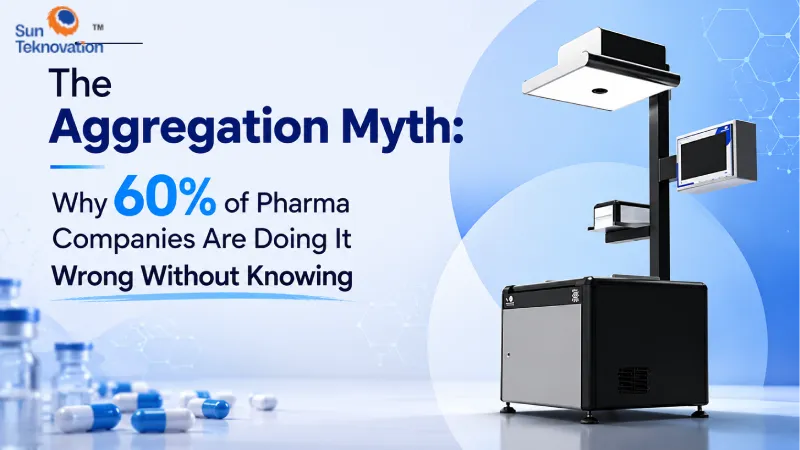
A Multi 2D Aggregation Machine is purpose-built to eliminate these failure points. Rather than relying on operator scanning discipline, it automates the entire hierarchy-building process — reading all 2D codes on units as they are packed into cases, confirming each link in real time, and creating a verified electronic record before the case is sealed.
For Pallet Aggregation, the same logic applies. As cases are loaded, the machine reads each case identifier and builds the pallet-level hierarchy automatically — no manual recording, no paper, no assumption that the scan worked.
The result is a complete, verified, electronically documented aggregation hierarchy that matches what is physically in the box, on the pallet, and in the shipment — every time.
When Track and Trace Aggregation is working correctly, three things happen on every packaging run:
- Every unit serial number is electronically confirmed as belonging to a specific case — at the moment of packing, not after
- Every case identifier is confirmed as belonging to a specific pallet — at the moment of loading.
- Every aggregation event generates a tamper-evident electronic record that feeds into your traceability system and can be submitted to regulatory reporting platforms.
This is the standard that Multi 2D Aggregation Machine Manufacturers in India like Sun Teknovation Pvt Ltd build toward — not just technically functional aggregation, but audit-ready, regulatory-grade traceability at every packaging level.
Why Choose Us
At Sun Teknovation Pvt Ltd., aggregation is not a bolt-on feature — it is a core part of how we design our track and trace systems. As established Multi 2D Aggregation Machine Manufacturers in India, we build solutions that cover manual and automated aggregation, unit-to-case and Pallet Aggregation, and full electronic record generation across every level of the packaging hierarchy. With 14+ years of experience, 1,250+ installations globally, and active deployments across markets including DSCSA, EU FMD, ANVISA, and BPOM, Sun Teknovation Pvt Ltd brings the regulatory understanding and technical depth to get aggregation right from day one. Our systems integrate with your existing line setup without unnecessary disruption — and our team supports you through validation and reporting configuration, so your compliance is complete, not partial.
Conclusion
Aggregation sounds straightforward — link the units to the case, link the cases to the pallet. The reality is that most compliance failures in Track and Trace Aggregation come not from missing equipment, but from processes that create unverified links, skip Pallet Aggregation, or rely on manual recording at speeds where errors are inevitable. A validated Packaging Aggregation Machine with automated 2D hierarchy building removes these risks entirely. If your facility is shipping to regulated markets and your aggregation is still partially manual or unverified in real time, the gap is already there — it just has not surfaced yet. Sun Teknovation Pvt Ltd is ready to help you close it before it does.Is your aggregation process actually building verified, audit-ready hierarchies — or just scanning and assuming? Connect with Sun Teknovation Pvt Ltd today and find out exactly where your gaps are.
Call us: +91 98982 45695 or Email: connect@sunteknovation.com.
Frequently Asked Questions

Ajay Roshania
Co-Founder & Director (Technical), Sun Teknovation Pvt. Ltd.
Visionary leader driving India’s pharma innovation globally. Expert in turning regulatory challenges into growth opportunities. Leads development of intelligent, future-ready systems that ensure compliance, trust, and scalability. Champion of “Made in India, Trusted Everywhere,” preparing the pharma industry for long-term success.