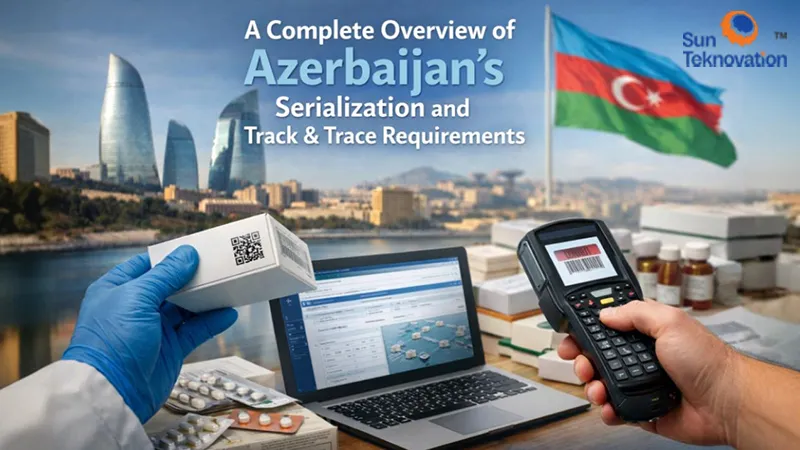
Azerbaijan isn’t just updating a few rules here and there — the country is seriously transforming how medicines move through its supply chain. And if you’re a global pharma manufacturer, exporter, or distributor, this is something you can’t afford to ignore anymore.
In 2024, the government moved forward with mandatory pharmaceutical serialization and the rollout of a national Track & Trace system. That means medicines are no longer treated like “just products with labels.” Now they need digital identities that can be tracked from the moment they’re packed to the moment they reach the pharmacy shelf.
What Azerbaijan’s Serialization and Track & Trace System Includes
At the heart of Azerbaijan’s new regulatory landscape is a suite of requirements designed to digitally monitor medicines at every stage: from production halls to hospital dispensaries and community pharmacies. The system puts global trade item data, traceability tools, and real-time monitoring at the centre of pharmaceutical safety.
Core Elements of Azerbaijan’s Pharmaceutical Track & Trace System
Azerbaijan is really tightening up its medicine safety regime with a state-of-the-art digital tracking system. At the heart of this system are 3 vital building blocks that any manufacturer, importer or distributor has got to follow.
- Pillar 1 - Every Medication Has to Be Tracked: Every pack of meds must carry a genuine 2D barcode - one that's good with GS1 standards. What's inside the barcode is the all-important GTIN, plus a unique serial number, the batch/lot number and the expiry date. No messing about - that gives each unit a full digital ID.
- DTMS - The Central Hub: The DTMS (Drug Tracking and Monitoring System) handled by the government keeps tabs on every product moving around the supply chain - right from production to distribution and then to the pharmacist. And with each scan, they get a real-time view of what's going on and it makes it much easier to make sure the rules are being followed.
- Phased Rollout: They started off with the high-risk medications - the things like painkillers and diet pills - but they're gradually broadening it out to include other types of medication by 2024 and beyond.
The basic idea is simple - no medication is allowed to move forward without being properly identified digitally.
Why Serialization Is No Longer Optional
Pharmaceutical serialization in Azerbaijan isn’t a future trend — it’s compliance reality. Starting 2024, medicines without proper Data Matrix codes can be refused at customs or rejected from distribution. Manufacturers must strike a balance between regulatory deadlines, production changes, and IT system upgrades. Here’s what this means in practice:
- Every saleable unit must be identified with a unique code traceable through the supply chain.
- Importers must confirm codes match DTMS formats.
- Local packaging and production facilities must integrate serialization technology.
This requirement improves transparency, reduces counterfeit risk, and builds trust in the pharmaceutical ecosystem.
Timelines: What Manufacturers Should Know
Azerbaijan’s rollout follows a step-by-step implementation plan that phased in key requirements:
- From January 1, 2024: Serialization became compulsory for medicines, especially psychotropic and potent drug categories.
- The government kept extending real-time Track & Trace through 2024 to include all medications via the DTMS.
If you delay adopting technical systems like GS1 barcode printing, traceability reporting, and secure data transfer, your products may be locked out of market access or delayed at borders.
How It Works – From Code to Consumer
Serialization doesn’t just add a sticker. It transforms a physical product into a digital data point that belongs to a global system recognized by regulators and trading partners. The main data captured includes:
- GTIN (Global Trade Item Number)
- Unique serial number
- Batch/Lot number
- Expiry date
Each of these elements gets securely encoded into a GS1 Data Matrix barcode that can be scanned at every distribution stage. That’s how wholesalers, pharmacies, and inspectors verify legitimacy and trace history.
Real Benefits for Producers and Supply Chains
Implementing serialization and Track & Trace systems has benefits that go far beyond compliance, but they do come with a cost:
- Supply Chain Transparency: You don’t have to wonder where your products went. You can see exactly where they are, and who handled them at every step.
- Reduced Counterfeits: When every pack has a secure digital identity, it becomes much harder for fake medicines to sneak into the market.
- Efficient Recalls: If something goes wrong, you can track the exact batch in minutes and take action fast — instead of pulling everything back.
- Global Alignment: Using GS1 standards keeps you in line with global expectations, so expanding into other regulated markets becomes easier.
And with every manufacturer adapting, those who move faster gain an operational edge.
How Sun Teknovation Pvt Ltd Helps You
Compliance isn’t just ticking boxes — it’s about seamless implementation that doesn’t disrupt production lines or market plans. Sun Teknovation Pvt Ltd specializes in helping pharmaceutical companies build serialization and track & trace systems that comply with Azerbaijan’s rules and global standards. We provide end-to-end support — from barcode implementation to system integration with DTMS, and from training to validation testing.
With deep expertise in GS1 standards, serialization software, and data exchange tools, Sun Teknovation Pvt Ltd brings clarity to complexity. We don’t just set up systems — we help your teams understand them, adapt smoothly, and stay ahead of regulatory changes for sustainable compliance success.
Why Choose Us
Sun Teknovation Pvt Ltd stands out because we don’t just understand the technology — we understand what happens on the shop floor. And that matters. Our team knows serialization is never “just about printing barcodes.” It’s about data accuracy, regulatory readiness, and real supply chain confidence. One small mismatch in data, and suddenly you’re facing delays, rework, or worse… compliance trouble.
When you partner with us, you get a custom implementation plan designed specifically around Azerbaijan’s Track & Trace strategy. Not a generic template. Not a copy-paste rollout. Real planning, with real support—right from integration to go-live. So, what does that mean for you?
- Faster deployment
- Fewer errors
- Cleaner reporting
- A smoother, less stressful compliance journey
Choose Sun Teknovation Pvt Ltd because your pharmaceutical compliance deserves specialists who make technology support your growth — not add extra complexity.
Conclusion
Azerbaijan’s serialization and Track & Trace requirements are reshaping pharmaceutical compliance in a way that’s practical, serious, and clearly here to stay. The country is clearly moving away from paper-based labels and shifting toward digital drug identities. That’s not just a regulation update. It’s a full upgrade of the supply chain—making it safer, more transparent, and harder for counterfeit products to slip through.
For manufacturers, the message is simple: adapt early or struggle later. Companies that implement compliant serialization systems, print GS1 Data Matrix barcodes, and integrate smoothly with Azerbaijan’s national monitoring platform will protect one thing that matters most—uninterrupted market access. And that’s exactly where the right partner makes all the difference.
With Sun Teknovation Pvt Ltd guiding your implementation, regulatory requirements stop feeling like pressure and start becoming operational strength. We help you reduce risk, avoid costly errors, and build trust with every batch you ship. Because when Track & Trace is done right, it won’t slow you down. It strengthens your business. Embracing Azerbaijan’s framework today means fewer compliance headaches tomorrow—and stronger global readiness as pharmaceutical standards keep evolving.
For a complete breakdown of Azerbaijan’s serialization and Track & Trace requirements — along with expert support for compliance setup — call +91 98982 45695 or email us at connect@sunteknovation.com today. We’re here to support your pharma compliance journey
Key Takeaways
- In 2024, Azerbaijan made it official: pharma serialization is no longer optional. And yes, it’s built around GS1 standards.
- The country now relies on a central system called DTMS to track medicines as they move from manufacturing to distribution and finally to dispensing.
- Every saleable pack must carry a GS1 2D Data Matrix barcode — without it, the product simply won’t fit into the system.
- The bigger win? Serialization makes the supply chain more transparent and helps stop counterfeit medicines from reaching real patients.
- And the companies that comply early? They avoid the chaos later, protect market access, and reduce regulatory risk in a big way.
FAQs

Ajay Roshania
Co-Founder & Director (Technical), Sun Teknovation Pvt. Ltd.
Visionary leader driving India’s pharma innovation globally. Expert in turning regulatory challenges into growth opportunities. Leads development of intelligent, future-ready systems that ensure compliance, trust, and scalability. Champion of “Made in India, Trusted Everywhere,” preparing the pharma industry for long-term success.