

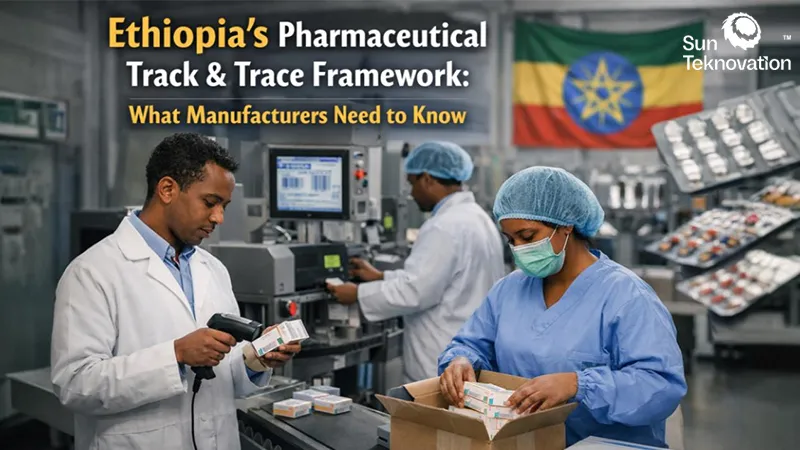
Efficient supply chains make millions safer. But in Ethiopia, counterfeit and substandard medicines are a serious risk — one that the government is tackling head-on with a national pharmaceutical track and trace system. If your company makes or exports medicines, you need this guide. Sun Teknovation Pvt Ltd will break down the track & trace requirements, deadlines, and compliance steps that are shaping the Ethiopian pharmaceutical landscape — no fluff, just the most important facts for manufacturers and supply chain teams.
What Is Ethiopia’s Pharmaceutical Track & Trace Framework?
At its core, Ethiopia’s Track & Trace framework focuses on one simple goal: proving medicine authenticity and building complete visibility across the entire pharmaceutical supply chain. It’s about trust. And control. EFDA isn’t playing around here. The Ethiopian Food, Medicines and Healthcare Administration and Control Authority has launched a centralized national traceability platform called the EFDA-MVC Traceability Hub. And the goal is clear. Stop counterfeit medicines. Improve public safety. Make sure every product can be traced—from the manufacturer all the way to the point of dispensing. This isn’t just “tracking” in a basic sense. It’s structured. Its system driven.
The framework is built around serialization and regulated data reporting, using global standards such as GS1 identifiers like GTIN and GLN. It also follows reporting protocols like EPCIS, which helps capture and share traceability events at every stage of the product journey. So yes, it’s compliance. But it’s also protection. And control. And trust.
Key Deadlines Manufacturers Must Know
Compliance isn’t theoretical — it’s scheduled:
- Register with EFDA-MVC Traceability Hub: Manufacturers and exporters had to complete this first step; missing registration jeopardizes market entry.
- Start Report Traceability Events: By June 3, 2026, all manufacturers must send serialized event data (like commissioning, shipping, receiving) into the national hub.
- Aggregation Reporting Mandatory: By December 1, 2026, parent-child packaging reporting (aggregation) is required to fully track units through distribution.
These milestones show how serious Ethiopia is about supply chain integrity and patient safety.
Serialization: The Foundation of Traceability
At the heart of the system is serialization — assigning each product unit a unique identifier that carries critical data:
| Element | Description |
|---|---|
| GTIN | Global Trade Item Number — identifies the product globally |
| Serial Number | Unique reference for each unit |
| Batch/Lot | Production batch number |
| Expiry Date | Validity info |
These data elements are encoded into a GS1 Data Matrix barcode on packaging, allowing scanning at every supply chain step. This standard not only enables tracking but empowers regulators, distributors, and healthcare providers with reliable visibility into where products have been and who handled them.
Benefits of Compliance for Manufacturers
Why invest in track & trace readiness? The advantages go far beyond regulatory boxes:
- Stronger supply chain visibility — Know where each product is and who handled it.
- Enhanced patient safety — Lower risk of counterfeit and substandard medicines reaching consumers.
- Better inventory control — Clear data on stock movement and expiry reduces waste.
- Improved recall efficiency — Rapid pinpointing of affected batches.
Manufacturers who take proactive steps now will gain competitive advantage and uninterrupted market access.
How Sun Teknovation Pvt Ltd Helps You Navigate This Complexity
Complying with global standards like serialization solutions, EPCIS reporting, and data integration isn’t simple — especially when markets like Ethiopia are enforcing strict timelines. That’s where Sun Teknovation Pvt Ltd steps in. We offer end-to-end support:
- Track & Trace Consultation Tailored to Ethiopia’s Regulatory Requirements
- Implementation of GS1-compliant serialization systems
- Integration with national reporting platforms like EFDA-MVC
- Training and data management support for production and distribution teams
Our expertise means you can focus on manufacturing excellence while we handle the regulatory complexity — saving time, cost, and stress.
Critical Challenges Manufacturers Face
Even with a framework in place, manufacturers should prepare for:
- Data integration hurdles with existing ERP and accounting systems.
- Training personnel on serialization processes.
- Meeting deadlines — delays can block imports or market access.
These are precisely the areas where a partner like Sun Teknovation Pvt Ltd can make a measurable difference.
Why Choose Us
Sun Teknovation Pvt Ltd combines deep regulatory knowledge with practical implementation experience. Our team doesn’t just advise — we execute. From GS1 barcode integration to real-time EPCIS reporting, we tailor solutions that align with your manufacturing goals and compliance deadlines. You get not just system setup, but ongoing support that builds confidence across your teams. That’s the difference between ticking a compliance check and transforming your supply chain for efficiency and market resilience.
Conclusion
Ethiopia’s pharmaceutical track & trace framework isn’t just another box to tick. It’s a real shift. A strategic one. Toward transparency, patient safety, and global-level compliance standards. For manufacturers, this means one clear thing: the old way won’t work anymore. Now, companies must start adopting serialized identifiers, reporting key traceability events, and getting ready for full aggregation tracking across packaging levels. And yes—this is a big move. But it’s also a smart one. Because these steps don’t just satisfy regulations. They protect patients. They reduce counterfeit risk. And they open up a stronger, more reliable entry into a growing and highly important market.
With Sun Teknovation Pvt Ltd by your side, regulatory timelines and technical integration stop feeling confusing and start becoming manageable, practical realities. The work gets structured. The implementation gets smoother. The compliance becomes achievable.
For detailed insights on Ethiopia’s Pharmaceutical Track & Trace requirements and how Sun Teknovation Pvt Ltd helps manufacturers comply and succeed, call us at +91 98982 45695 or email us at connect@sunteknovation.com today.
Key Takeaways
- Ethiopia’s Track & Trace system requires serialized barcodes on every pharmaceutical unit. No shortcuts. Every pack must be uniquely identifiable.
- Manufacturers must register with the EFDA-MVC Traceability Hub first.
- Reporting of traceability events becomes mandatory by mid-2026.
- EPCIS standards and GS1 Data Matrix are central to compliance.
- Proper integration and training ensure smoother market access and supply chain visibility.
FAQs

Hiren Shah
Co-Founder & Director (Marketing & Sales), Sun Teknovation Pvt. Ltd.
Visionary leader turning ideas into trusted global solutions. Focused on precision, innovation, and integrity, he drives Sun Teknovation to set industry standards while safeguarding lives worldwide.