

Zambia's pharmaceutical regulations don’t exist just on paper, they're the building blocks of a solid healthcare system, one that takes public health and the quality of medicine seriously every single day. if you're a business - whether you're a company looking to import, manufacture, or make a name for yourself in the healthcare industry - getting to grips with how compliance works in Zambia is a pretty big deal. Its impact is far-reaching - from getting a foothold in the market to building trust with consumers and your long-term prospects for growth. But here's the thing - the rules aren't exactly cut and dried. They are complicated, they keep changing, and they need some serious planning if you're going to get through it all without a hitch. Instead of drowning in a sea of technical jargon, let's break it down in plain English - so you feel like you've got a good handle on what Zambia is looking for and can start moving forward with some confidence.
What You Need to Know About Zambia Medicines Regulatory Authority (ZAMRA)
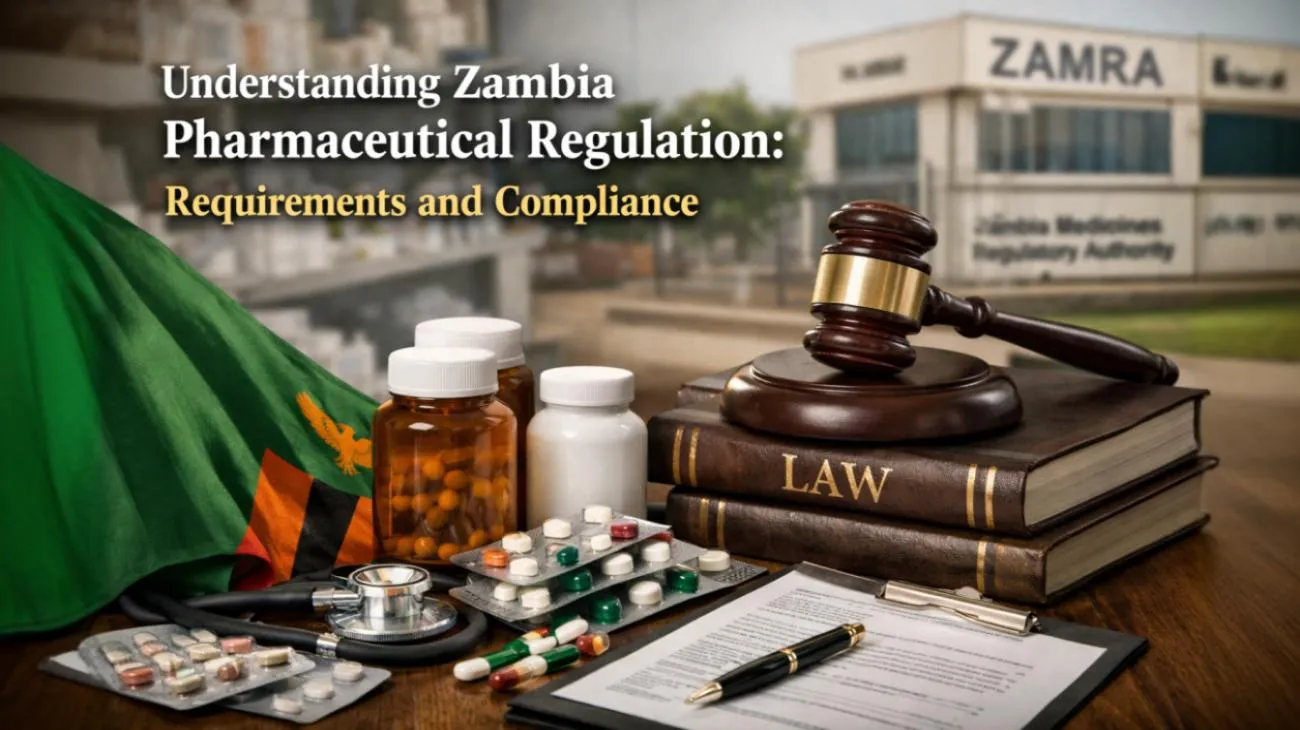
At the heart of all pharmaceutical compliance in Zambia is ZAMRA - the Zambia Medicines Regulatory Authority. Set up under the Medicines and Allied Substances Act No. 3 of 2013, ZAMRA is the main regulatory body and - to be blunt - it’s the one authority every pharma business in Zambia needs to take very seriously indeed.
ZAMRA has its finger on the pulse of a medicine in the country from the very start. That means everything from manufacture to import, right through to how medicines get to the shops and used by consumers. If you think of ZAMRA, think watchdog - because that's what it is: making sure that everything on the market is good to go - safe, effective, and genuine.
It's not just pharma products they're watching over either. ZAMRA also keep an eye on cosmetics, veterinary products and - interestingly - they oversee clinical trials. If a product touches healthcare in any way, chances are ZAMRA will be involved.
Key Components of Zambia’s Pharmaceutical Compliance
To operate legally and sustainably in Zambia’s pharmaceutical space, businesses must follow several regulatory milestones:
Licensing & Registration
Before anything else, whether you’re a manufacturer, importer, or distributor, you need approval from ZAMRA. Licensing isn’t just a formality — it verifies your legal standing and ensures compliance with national quality standards. That includes:
- Pharmaceutical licence for selling drugs
- Premise registration to confirm your facility meets safety and storage standards
- Certificate of registration valid annually
Licence fees vary by category and are outlined in Zambia’s regulatory schedules.
Import & Export Compliance
Want to bring medicines into Zambia? An import permit is mandatory before any shipment arrives. It’s more than paperwork — it’s a legal requirement under the Medicines and Allied Substances Act. To get this permit, you must provide:
- Application forms
- Proof of fees paid
- Supporting documentation based on product type
Once approved, ZAMRA monitors every consignment to safeguard product safety at the border and in the market.
Premises & Inspection Standards
ZAMRA doesn’t stop at paperwork. Premises seeking operation must pass inspections to ensure conformity with health and safety requirements. That means inspection of storage, layout, equipment, and staff qualification. Even retail pharmacies and wholesalers have detailed minimum space and facility benchmarks, including designated storage, dispensary, and consultation areas.
Good Distribution and Manufacturing Practices
Zambia’s regulatory landscape integrates globally accepted standards — including Good Distribution Practices (GDP) and Good Manufacturing Practices (GMP) — for pharmaceutical products. These aren’t suggestions; they are required to maintain quality through the supply chain. Complying means tight control over product flow, secure storage, qualified staff, traceability, and documentation at every step.
Why This Matters for Your Business
Regulatory compliance isn’t just red tape — it’s the foundation of credibility. Failure to comply can lead to:
- Denied licence approvals
- Fines or product recalls
- Brand reputation harm
- Loss of market opportunities
By staying aligned with Zambia’s requirements, you protect your business while contributing to safer healthcare delivery for millions.
How Sun Teknovation Pvt Ltd. Helps You Stay Compliant
At Sun Teknovation Pvt Ltd., we’re not just another tech provider — we’re your partner in making pharmaceutical compliance simpler, smarter, and stronger. From advanced Track and Trace solutions to intuitive inspection and serialization systems, we help you stay aligned with regulations while improving quality control.
Whether your challenge is meeting serialization mandates, improving inspection accuracy, or elevating supply chain traceability, we bring cutting-edge technology and practical experience to the table, so compliance becomes a business advantage — not a burden.
Conclusion
Trying to figure out Zambia's pharmaceutical regulations is something you can't just put off till "later". If you're planning on breaking into the Zambian market or even just dipping your toe in - compliance is just plain non-negotiable. Zambia’s regulatory system stands on a few major pillars — licensing and import permits, inspection standards, and ongoing monitoring. Together, they help ensure medicines are safe, reliable, and genuinely authentic. And right at the centre of it all is ZAMRA, the Zambia Medicines Regulatory Authority. They’re the ones steering the system, enforcing compliance, and making sure everything stays under control.
When you get on top of these obligations, you're not just avoiding trouble. You're looking out for your business, earning the trust of your customers and setting yourself up for real long-term growth. And with a bit of proper support, compliance doesn't have to be a chore. Working with experienced tech partners like Sun Teknovation Pvt Ltd. can make it much easier to turn regulatory requirements into practical, user-friendly systems — especially for inspections, product tracking, and quality control. At the end of the day, compliance isn’t just about ticking boxes. It’s about improving healthcare delivery in Zambia — and beyond.
For expert insight on Zambia pharmaceutical regulation: requirements and compliance and how advanced compliance technology supports your business needs, call +91 98982 45695 or email us at connect@sunteknovation.com today.
Key Takeaways
- Zambia Medicines Regulatory Authority, or ZAMRA for short, is the agency responsible for over-seeing the pharma world in Zambia, making sure everything is up to par.
- Need a permit to bring any medicines into Zambia - no getting around that one.
- Before you can even start selling you need a licence - and that's only going to be approved once the ZAMRA inspectors have given the all-clear on the premises.
- Industry players are expected to follow the rules — meaning they must consistently comply with Good Manufacturing Practices (GMP) and Good Distribution Practices (GDP).
- If you're looking for a way to make compliance easier and quality control that bit better, look no further than some of the latest tech - things like automated inspection systems and Track & Trace genuinely do make a difference.
FAQs

Hiren Shah
Co-Founder & Director (Marketing & Sales), Sun Teknovation Pvt. Ltd.
Visionary leader turning ideas into trusted global solutions. Focused on precision, innovation, and integrity, he drives Sun Teknovation to set industry standards while safeguarding lives worldwide.